
Direct Mail Advertising: Why It Still Works for Small Businesses
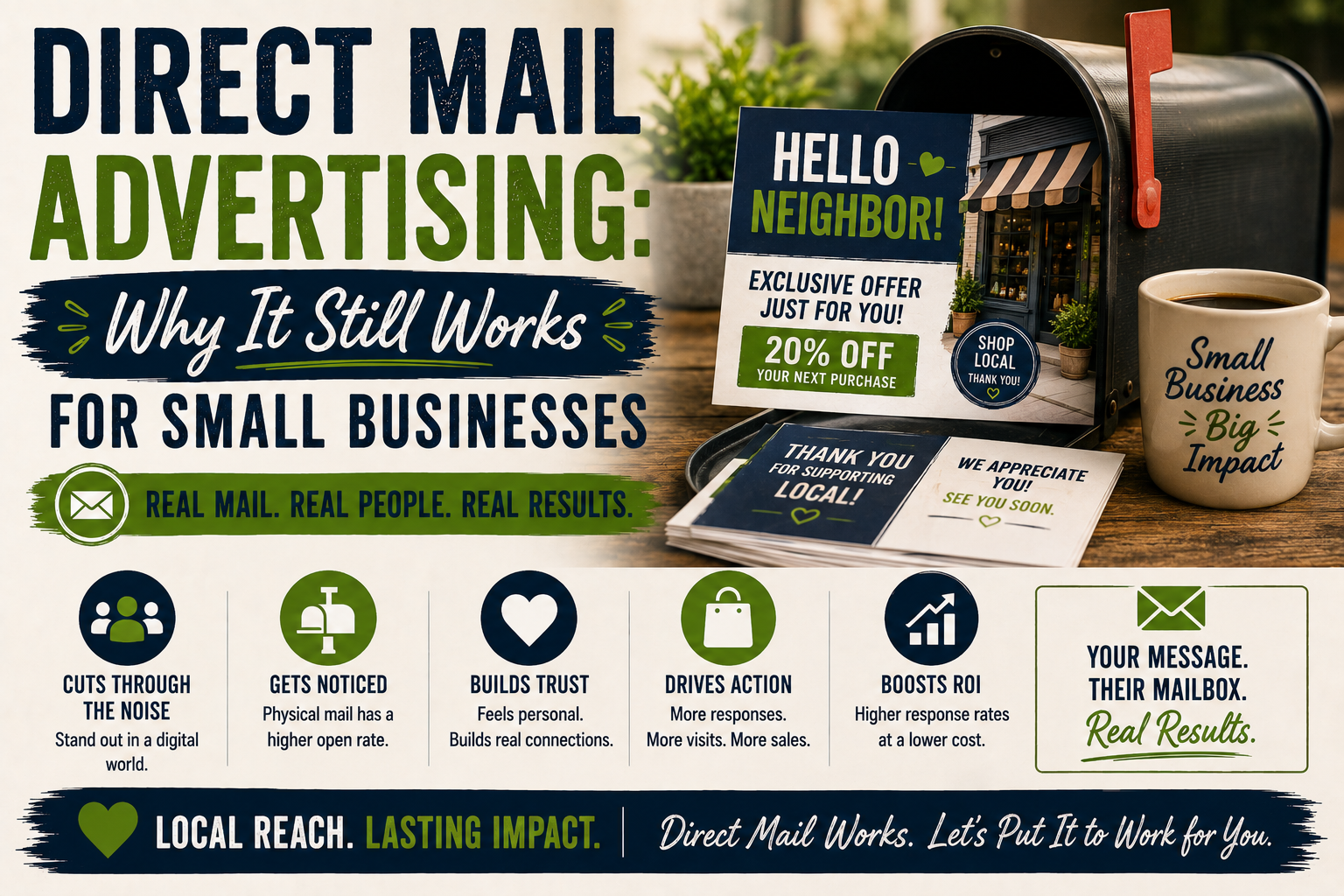
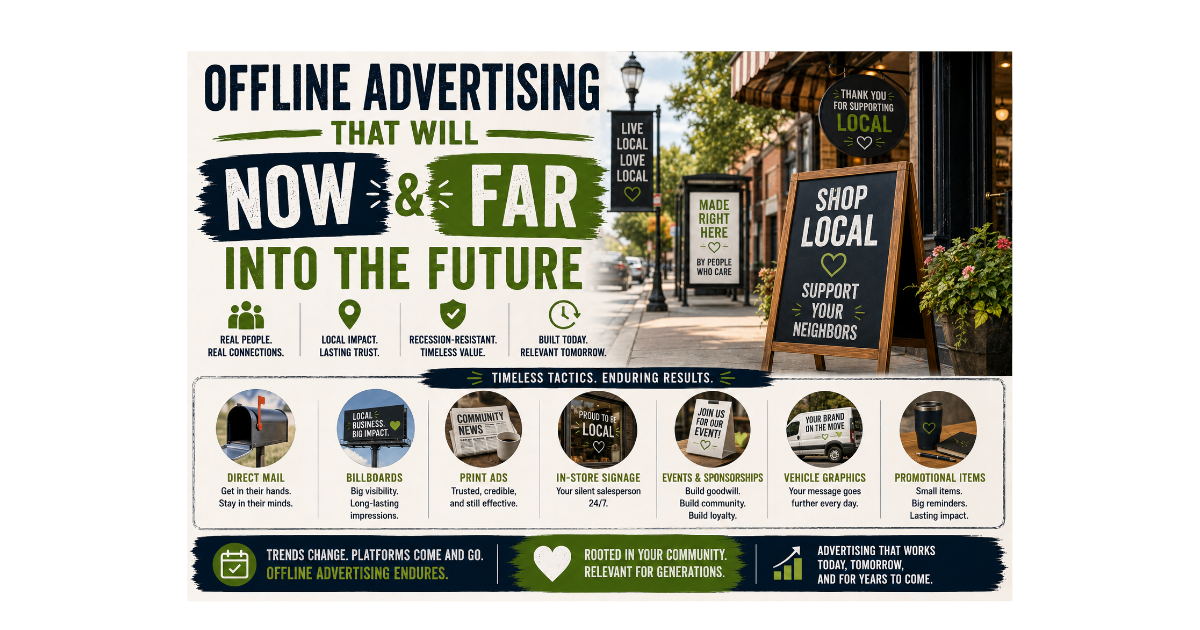
Many small business owners assume direct mail advertising is outdated. The truth is quite the opposite. Direct mail remains one of the most effective ways to reach local customers, build trust, and generate sales—especially for brick-and-mortar businesses.
Direct mail advertising involves sending physical marketing materials directly to a prospect's mailbox. This can include postcards, flyers, catalogs, brochures, coupons, newsletters, or sales letters.
Unlike online ads that disappear with a click, direct mail puts a tangible marketing message directly into a customer's hands.
One of the biggest advantages of direct mail is its ability to target specific audiences. Businesses can mail to entire neighborhoods, specific ZIP codes, or even highly targeted demographic groups.
For example, a local landscaping company can send postcards to homeowners in upscale neighborhoods, while a new restaurant can distribute coupons to residents within a five-mile radius.
Another reason direct mail works is that it faces less competition than digital marketing. The average consumer sees thousands of online advertisements every day. Most are ignored.
However, physical mailboxes contain far fewer marketing messages, making it easier for your offer to stand out. A well-designed postcard with a strong headline and compelling offer can capture attention in seconds.
Direct mail is also highly effective at building credibility. Consumers often perceive printed materials as more trustworthy and professional than online ads. Receiving a professionally designed piece of mail creates a sense of legitimacy that can be difficult to achieve through digital channels alone.
The key to successful direct mail advertising is presenting an irresistible offer. Simply sending a flyer that says "Buy From Us" is rarely enough. Instead, give prospects a reason to take action.
Discounts, coupons, free consultations, limited-time promotions, and exclusive offers can dramatically increase response rates. Pair the offer with a clear call-to-action that tells readers exactly what to do next.
Tracking results is equally important. Use coupon codes, dedicated phone numbers, custom landing pages, or QR codes to measure responses. This allows you to calculate your return on investment and determine which campaigns generate the best results.
For maximum effectiveness, direct mail should not be a one-time effort. Repetition is critical in marketing. Many consumers need to see a message multiple times before they take action. Consistent mail campaigns help build familiarity and keep your business top-of-mind when customers are ready to buy.
Despite the rise of digital marketing, direct mail advertising continues to deliver impressive results for local businesses. Its ability to target specific audiences, build trust, and generate measurable responses makes it a valuable addition to any marketing strategy.
For small businesses looking to increase foot traffic, generate leads, and boost sales, direct mail remains one of the most powerful offline marketing tools available.