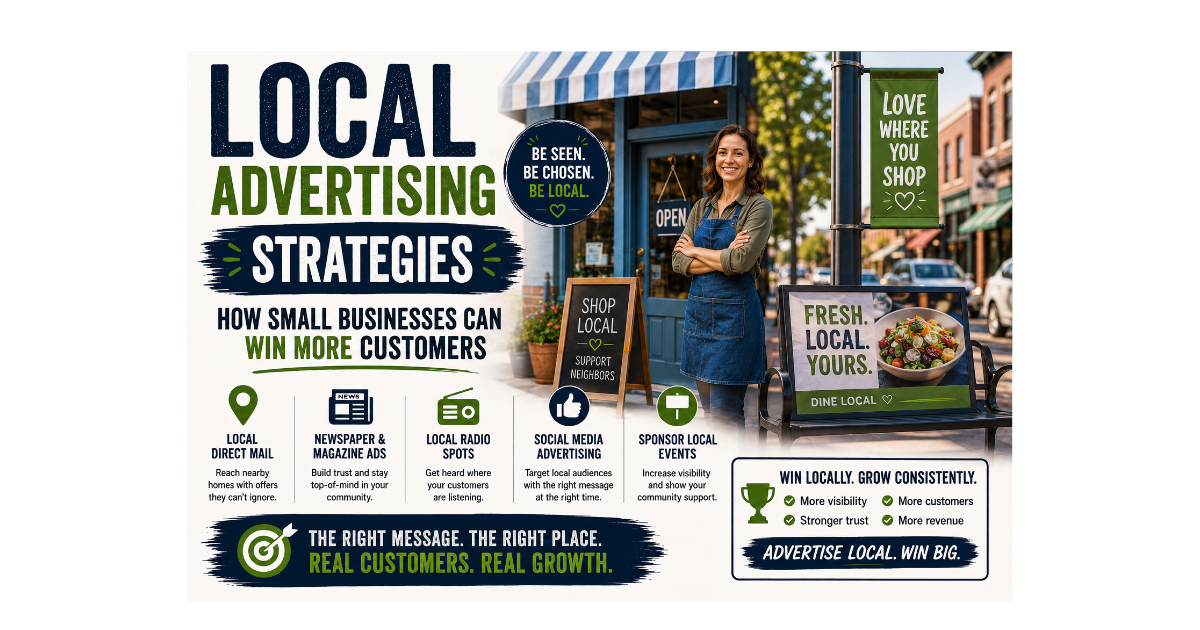

Creating an Advertising Plan
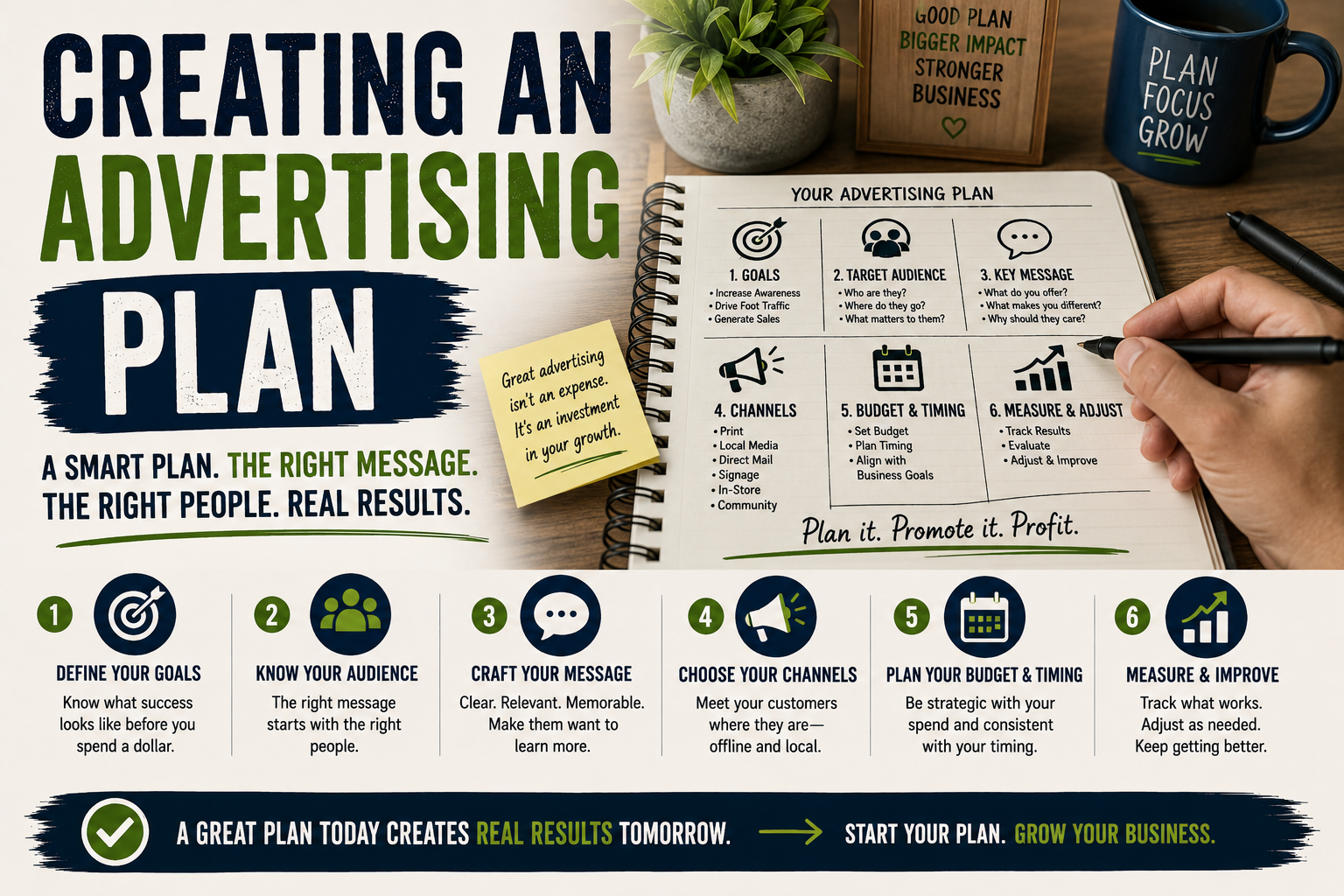
Many small business owners waste money on advertising because they jump straight into running ads without a clear plan. An effective advertising plan helps you focus your budget, target the right audience, and measure your results.
Whether you're using print ads, direct mail, local radio, social media, or a combination of marketing channels, having a strategy in place is essential.
Define Your Advertising Goals
The first step in creating an advertising plan is determining exactly what you want to achieve. Your goal might be to increase foot traffic, generate phone calls, boost website visits, promote a special offer, or improve brand awareness in your local community.
Specific goals make it easier to measure success. Instead of saying, "I want more customers," set a goal such as "Increase store visits by 20% over the next three months."
Identify Your Target Audience
Not everyone is a potential customer. Successful advertising focuses on reaching the people most likely to buy from you.
Consider factors such as age, gender, income, interests, location, and buying habits. For example, a local hardware store may target homeowners, while a children's tutoring center may focus on parents with school-aged children.
The more clearly you define your audience, the more effective your advertising will be.
Choose the Right Advertising Channels
Different audiences respond to different types of advertising. Your advertising plan should include the channels that best reach your ideal customers.
Some common options include:
- Direct mail
- Newspaper advertising
- Local magazines
- Radio advertising
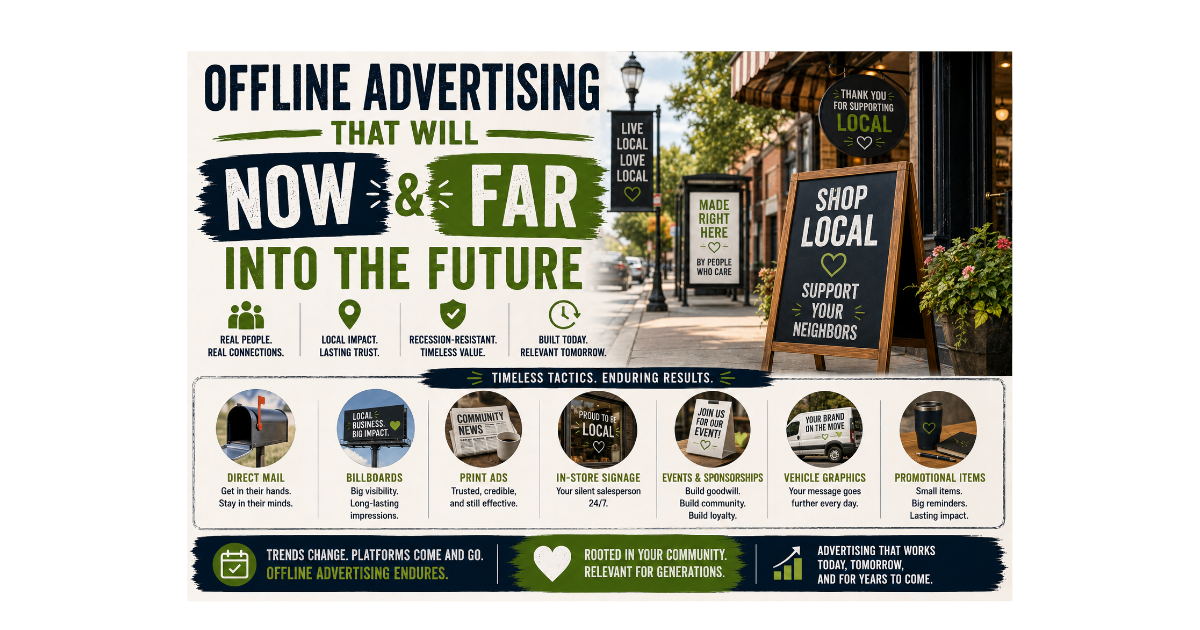
- Billboards and signage
- Community sponsorships
- Social media advertising
- Search engine advertising
Many local businesses find that combining online and offline advertising produces the best results.
Create Your Advertising Message
Your advertisement should clearly explain what makes your business different. Focus on benefits rather than features.
Ask yourself:
- What problem do you solve?
- Why should customers choose you?
- What offer can encourage immediate action?
A strong call to action is critical. Tell people exactly what to do next, whether that's calling your business, visiting your store, requesting a quote, or redeeming a coupon.
Set Your Budget
Determine how much you can realistically invest in advertising each month. Your budget should align with your goals and expected return on investment.
Start with a budget you can sustain consistently. Running smaller campaigns regularly often works better than spending a large amount once and then stopping.
Track and Measure Results
An advertising plan is only effective if you measure performance. Track phone calls, website traffic, coupon redemptions, store visits, lead forms, and sales generated by each campaign.
Use unique phone numbers, promo codes, landing pages, or customer surveys to identify which advertisements are producing results.
Review and Improve
Advertising is not a one-time activity. Review your results regularly and make adjustments based on what is working.
Successful businesses treat advertising as an ongoing process of testing, measuring, and improving. A well-structured advertising plan helps eliminate guesswork, maximize your marketing budget, and generate more customers over time.