
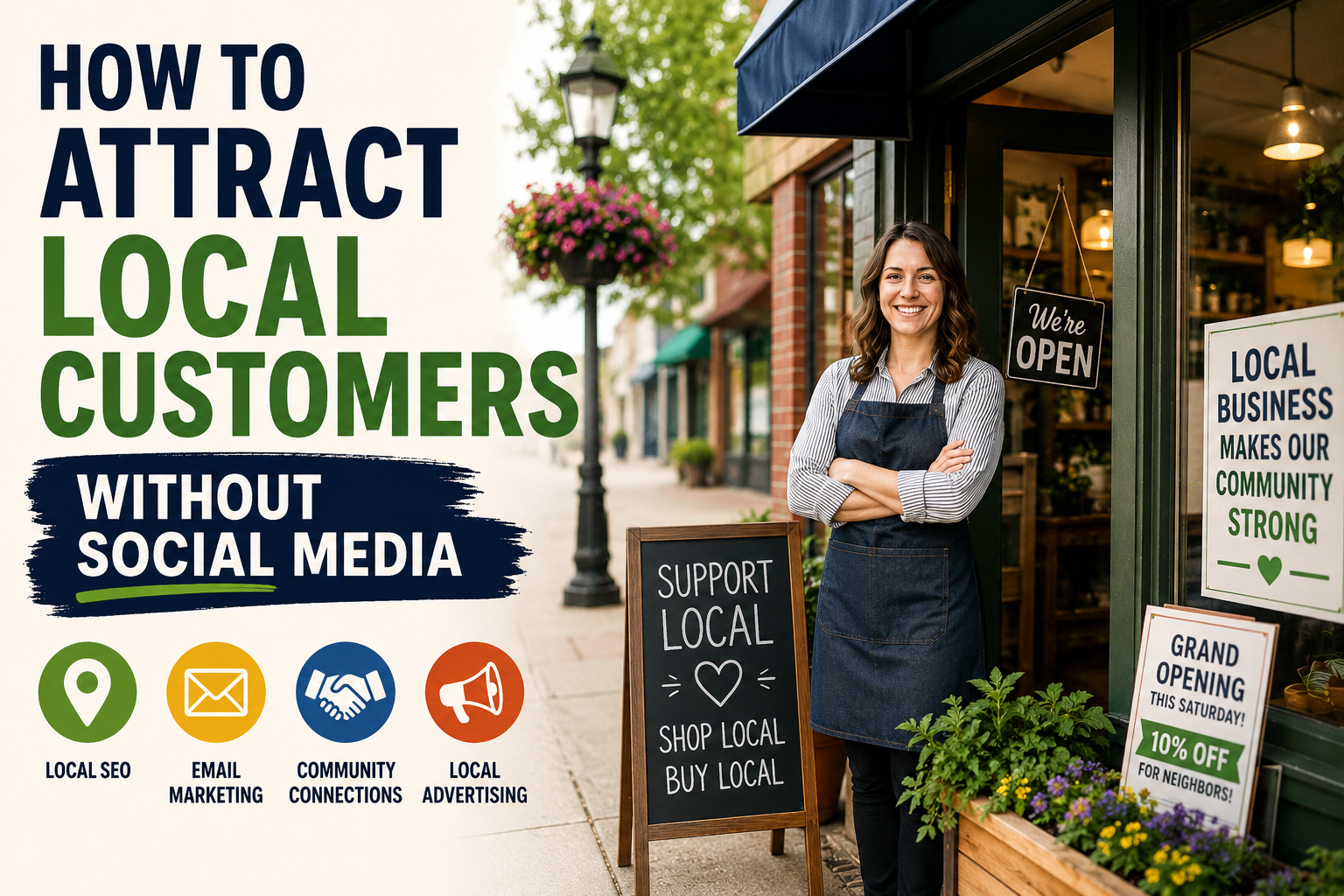
How to Attract Local Customers Without Social Media
Randall Magwood

Let’s get something straight right out of the gate…


You do not need social media to get customers.


  • Not followers.
  • Not likes.
  • Not dancing videos.


What you need is attention, a compelling offer, and a way to put that offer directly in front of hungry buyers.


That’s it.


And for local businesses? That’s actually easier offline.


So if you’ve been banging your head against Facebook, Instagram, or whatever the latest “must-use” platform is…


Good.


You’re about to take the faster, more reliable road.


First: Understand This or Stay Broke


Customers don’t magically appear because you “exist.”


They show up when:


  1. They know you exist
  2. They want what you offer
  3. You make it easy (and urgent) to act


Miss any one of those, and you’re invisible.


Social media tries to handle all three… poorly.


Offline marketing lets you hit all three directly.


Strategy #1: Put Your Offer Where People Already Are


Most business owners try to drag people to them.


Wrong move.


You go where the people already are—and intercept them.


Think:


  • Coffee shops
  • Gas stations
  • Grocery stores
  • Busy intersections
  • Community bulletin boards


These places are crawling with your potential customers.


What to Do:


Create simple, bold offers and place them in high-traffic spots.


Examples:


  • Flyers with a strong headline and offer
  • Tear-off coupons
  • Small posters with a “today only” deal


But here’s the key…


Don’t make it pretty.


Make it impossible to ignore.


  • “Free Dessert with Any Meal — Today Only”
  • “New in Town? Get 20% Off Your First Visit”
  • “Tired of Overpaying? Read This Before You Buy”


That’s how you pull attention.


Strategy #2: Partner Your Way Into Instant Traffic


You know who already has your customers?


Other businesses.


Non-competing ones.


And right now, they’re sitting on lists, foot traffic, and relationships you can tap into.


What to Do:


Create simple partnerships.


Examples:


  • A gym promotes your smoothie shop
  • A salon promotes your boutique
  • A mechanic promotes your car detailing service


In return, you promote them.


Or better…


You create a joint offer.


  • “Spend $25 at our store, get a free coffee next door.”


Now you’re sharing traffic instead of fighting for scraps.


Strategy #3: Use Direct Mail (Yes, It Still Works Like Crazy)


Most people ignore their social feeds.


But their mailbox?


That still gets attention.


Especially when something inside looks valuable.


What to Do:


Send targeted mail to local households.


  • Not junk.
  • Not “Dear Resident” garbage.


Real offers.


Examples:


  • A postcard with a bold headline and discount
  • A letter that tells a story and makes an irresistible offer
  • A coupon sheet with a clear expiration date


And here’s where most people screw up…


They send one piece and quit.


Big mistake.


Consistency wins.


The businesses that mail regularly are the ones that dominate locally.


Strategy #4: Turn Your Storefront Into a Magnet


If people are already passing by your business…


And not walking in…


That’s on you.


Your storefront should sell.


Most don’t.


They just sit there… quietly losing money.


What to Do:


Make your storefront scream value.


Use:


  • Big, bold headlines
  • Clear offers
  • Eye-catching visuals


Instead of:


“Welcome to Smith’s Store”


Try:


  • “Stop! Get 2 for 1 — Today Only”
  • “Locals Love This — Come See Why”
  • “Free Sample Inside — No Purchase Needed”


Your goal is simple:


Make it harder to walk past than to walk in.


Strategy #5: Host Simple, Irresistible Events


Events pull people in.


Not boring ones.


Not “store anniversary sale” nonsense.


I’m talking about something with a hook.


What to Do:


Create events that give people a reason to show up now.


Examples:


  • Free tasting day
  • Live demo or workshop
  • Giveaway event
  • “Customer appreciation” day with real perks


Then promote it locally:


  • Flyers
  • Partnerships
  • In-store signage
  • Word of mouth


You’re not just selling…


You’re creating an experience.


Strategy #6: Build a List (Offline Goldmine)


If you’re not collecting customer info…


You’re starting from zero every day.


That’s exhausting—and unnecessary.


What to Do:


Capture names, emails, or phone numbers.


Offer something in exchange:


  • Discounts
  • Freebies
  • Entry into a giveaway


Then follow up.


This is where the magic happens.


Send:


  • Special offers
  • Event invites
  • Limited-time deals


Now you’re not chasing customers…


You’re bringing them back on demand.


Strategy #7: Use Old-School Guerrilla Tactics


This is where things get fun.


Because almost nobody is doing this anymore.


Which means it stands out.


What to Do:


Get creative and a little unconventional.


Examples:


  • Hand out samples on the street
  • Chalk messages on sidewalks (where allowed)
  • Place attention-grabbing signs in unexpected places
  • Use branded vehicles or mobile ads


The goal?


Interrupt the pattern.


Make people look twice.


And once you’ve got their attention…


Hit them with an offer they can’t ignore.


Strategy #8: Make Your Customers Do the Selling


Happy customers are walking billboards.


But most businesses never activate them.


What to Do:


Give customers a reason to refer others.


Examples:


  • “Bring a friend, both get 20% off”
  • Referral rewards
  • Loyalty perks for repeat visits


And don’t be shy about asking.


A simple:


“Know anyone else who’d love this?”


Can go a long way.


The No-Social-Media Action Plan


Let’s boil this down.


If you want local customers—without touching social media—do this:


  • Create a killer offer
    Something specific, valuable, and urgent


  • Put it in high-traffic locations
    Go where your customers already are


  • Partner with nearby businesses
    Tap into existing audiences


  • Use direct mail consistently
    Stay top-of-mind


  • Upgrade your storefront
    Turn passersby into walk-ins


  • Capture and follow up with leads
    Build repeat business


  • Get a little unconventional
    Stand out in a sea of sameness


Final Word


Social media is crowded.


Noisy.


Unpredictable.


But local marketing?


That’s still wide open.


Because most business owners are too busy chasing likes…


While ignoring the people right outside their door.


That’s your opportunity.


So skip the algorithms.


Skip the scrolling.


And start putting real offers in front of real people—right in your own backyard.


Because when you do…


You won’t just attract customers.


You’ll own your local market.
Free offline marketing ebook
By r.magwood24 June 16, 2026
Tired of wasting money on untrackable ads? Learn how to measure offline marketing success with simple tools like unique codes and prove your ROI. Stop guessing.
By Randall Magwood June 16, 2026
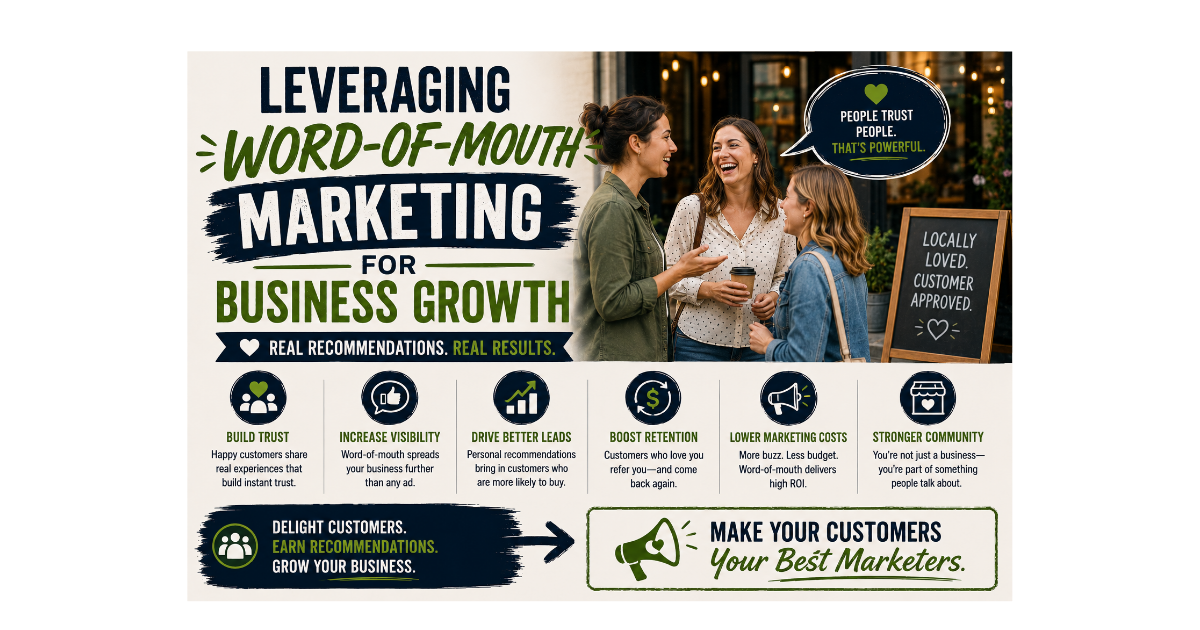
Word-of-mouth marketing is one of the oldest and most effective forms of promotion. Long before digital advertising and social media existed, businesses relied on satisfied customers to spread the word about their products and services. Today, despite advances in technology, word-of-mouth marketing remains one of the most trusted and influential factors in a customer's buying decision. At its core, word-of-mouth marketing occurs when customers voluntarily recommend a business to friends, family members, coworkers, or others in their network. These recommendations carry significant weight because they come from people who are perceived as trustworthy and unbiased. Studies consistently show that consumers are more likely to purchase from a business that has been recommended by someone they know. The foundation of successful word-of-mouth marketing is delivering an exceptional customer experience. Customers rarely talk about average businesses, but they frequently share stories about businesses that exceed their expectations. Whether it's outstanding customer service, exceptional product quality, or a memorable shopping experience, giving customers something worth talking about is the first step toward generating positive referrals. Another powerful way to leverage word-of-mouth marketing is through referral programs. By offering incentives such as discounts, gift cards, loyalty points, or exclusive perks, businesses can encourage existing customers to recommend them to others. A well-designed referral program benefits both the referrer and the new customer, creating a win-win situation that motivates participation. Customer reviews also play a major role in modern word-of-mouth marketing. Online reviews on platforms such as Google, Yelp, and Facebook allow satisfied customers to share their experiences with a broader audience. Encouraging happy customers to leave reviews can significantly increase a business's visibility and credibility. Responding professionally to both positive and negative reviews further demonstrates a commitment to customer satisfaction. Social media has expanded the reach of traditional word-of-mouth marketing. Customers can now share their experiences instantly with hundreds or even thousands of followers. Businesses can encourage social sharing by creating engaging experiences, running contests, showcasing customer success stories, and interacting regularly with their audience. User-generated content, such as photos, testimonials, and videos , can be especially effective because it serves as authentic social proof. Building strong relationships with customers is another key strategy. Businesses that stay connected with their customers through email newsletters, loyalty programs, community involvement, and personalized communication are more likely to remain top-of-mind when referrals opportunities arise. The stronger the relationship, the more likely customers are to recommend the business to others. Ultimately, word-of-mouth marketing is about earning trust and creating positive experiences that customers naturally want to share. While advertising can create awareness, personal recommendations often drive action. By focusing on customer satisfaction, encouraging referrals, leveraging reviews, and nurturing customer relationships, businesses can turn their existing customers into a powerful and cost-effective marketing force that generates long-term growth.
By Randall Magwood June 16, 2026
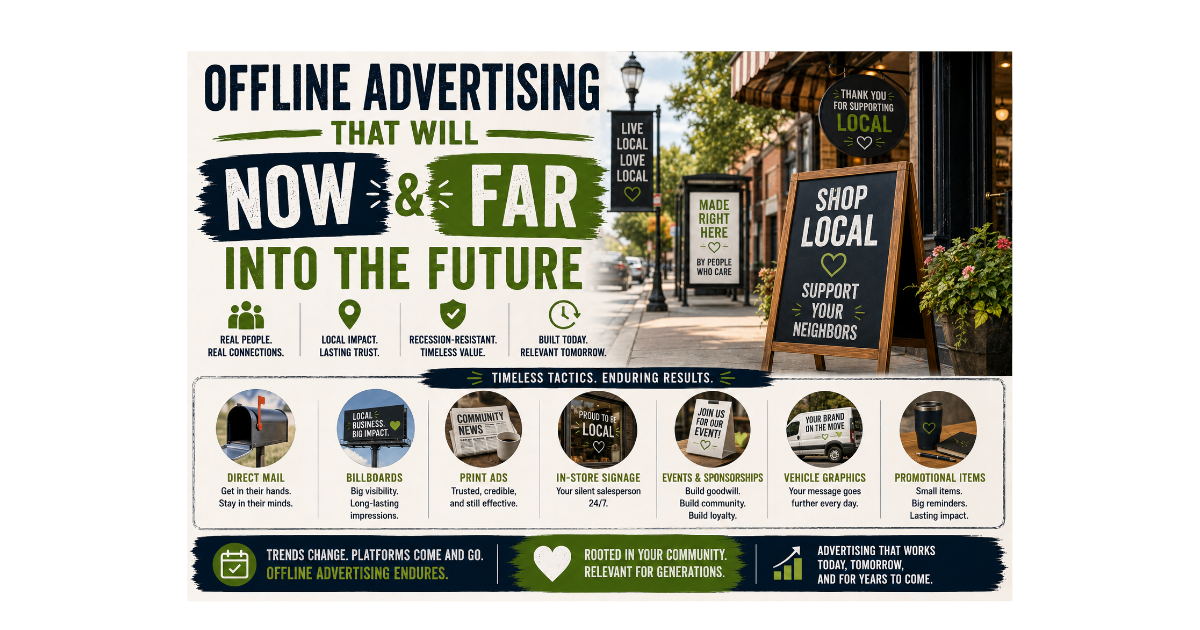
Many small business owners overlook one of the most powerful tools available to them: offline advertising. While digital marketing certainly has its place, offline advertising continues to deliver real results, especially for local businesses that rely on foot traffic and community awareness. The key isn't simply advertising offline—it's choosing the right methods and executing them consistently. One of the most effective forms of offline advertising is signage. Your storefront sign is often the first impression potential customers have of your business. A clear, professional, and attention-grabbing sign can attract people who would otherwise drive or walk right past your location. Window displays, sidewalk signs, and banners can also increase visibility and encourage impulse visits. Direct mail remains another highly effective advertising channel. Despite what many people believe, physical mail still gets noticed. A well-designed postcard , flyer, or promotional letter delivered directly to local households can generate strong response rates. Unlike emails that are often ignored or deleted, direct mail places your message directly into the hands of potential customers. Printed marketing materials also continue to perform well. Business cards, brochures, menus, and flyers help reinforce your brand and provide customers with something tangible to keep. When distributed strategically at local events, partner businesses, or community gathering places, these materials can generate ongoing exposure. Local sponsorships are another form of offline advertising that produces long-term benefits. Sponsoring youth sports teams, charity events, school functions, or community festivals puts your business name in front of local residents while building trust and goodwill. People are more likely to support businesses they recognize as active contributors to the community . Vehicle advertising offers exceptional value as well. Whether it's a full vehicle wrap, magnetic door signs, or simple branding decals, your company vehicle can generate thousands of impressions every week. Unlike many advertising methods that require ongoing spending, vehicle advertising often delivers years of exposure from a one-time investment.  Networking and community involvement should not be overlooked either. Attending local business events, trade shows, and networking groups helps create personal connections that advertising alone cannot achieve. People naturally prefer doing business with companies they know and trust. The most successful businesses understand that offline advertising works best when multiple strategies are combined. A customer may see your vehicle wrap, receive your direct mail piece, notice your storefront sign, and then encounter your business at a local event. These repeated exposures build familiarity and trust, making customers more likely to choose your business when they need your products or services. The biggest mistake business owners make is trying an advertising method once and expecting immediate results. Effective offline advertising requires consistency . The businesses that win are often the ones that stay visible month after month while competitors disappear. Offline advertising isn't outdated. In many cases, it's less competitive, more memorable, and more effective than crowded digital channels. When done correctly, it remains one of the best ways for local businesses to attract customers, build brand awareness, and generate long-term growth.
By Randall Magwood June 16, 2026
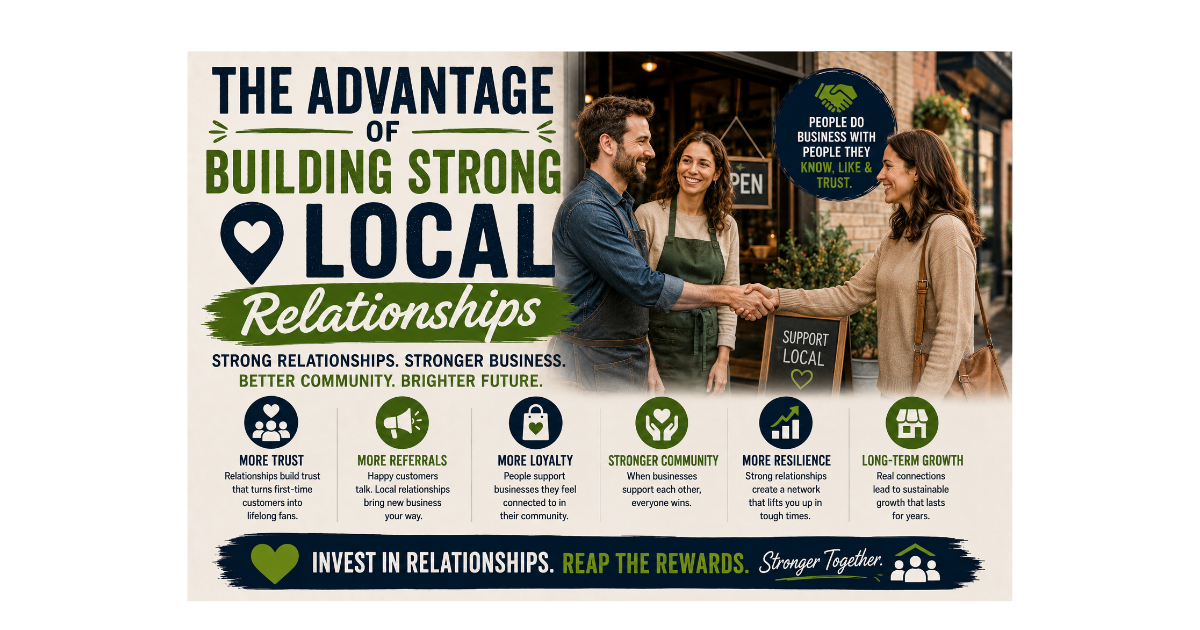
When it comes to growing a local business, many owners spend too much time chasing new customers and not enough time building relationships within their community. The truth is simple: people prefer to do business with companies they know, trust, and recognize. That's why building strong local relationships remains one of the most effective marketing strategies available. Strong local relationships create a network of people who can recommend your business, support your events, share your content, and become loyal customers. Unlike paid advertising, which stops working the moment you stop paying, relationships can continue generating business for years. One of the best places to start is by connecting with other local business owners. Look for businesses that serve the same audience without directly competing with you. For example, a coffee shop could partner with a bookstore, or a landscaping company could work with a local garden center. These partnerships can lead to cross-promotions , referral agreements, joint events, and shared marketing opportunities that benefit everyone involved. Community involvement is another powerful relationship-building strategy. Sponsoring local events, supporting youth sports teams, participating in charity fundraisers, or attending community festivals helps put your business in front of local residents. More importantly, it shows that you care about the community beyond simply making sales. People notice businesses that actively contribute to the places where they live and work. Networking also plays an important role. Joining local business associations, chambers of commerce, and networking groups allows you to meet potential customers and referral partners face-to-face. While many people view networking as a way to sell, the real goal should be building genuine connections. Focus on helping others, offering value, and learning about the challenges local businesses face. Over time, these relationships often lead to referrals and new opportunities . Customer relationships deserve just as much attention. Every interaction with a customer is a chance to strengthen trust and loyalty. Remembering names, following up after purchases, responding to feedback, and providing exceptional service all help create positive experiences. Satisfied customers are more likely to recommend your business to friends, family, and coworkers. Social media can also support local relationship-building efforts when used correctly. Instead of constantly promoting your products or services, engage with local organizations, celebrate community events, and highlight customer success stories. This helps position your business as an active and valued member of the local community. The key to building strong local relationships is consistency. Trust isn't built overnight. It develops through repeated positive interactions over time. Small actions, such as attending community events , supporting local causes, and helping other businesses succeed, can have a significant impact on your reputation. In today's competitive marketplace, strong local relationships provide something that online ads and marketing automation can't replicate: genuine human connection. Businesses that invest in their communities often find that those communities invest right back, creating a foundation for long-term growth, loyalty, and success .
By Randall Magwood June 16, 2026
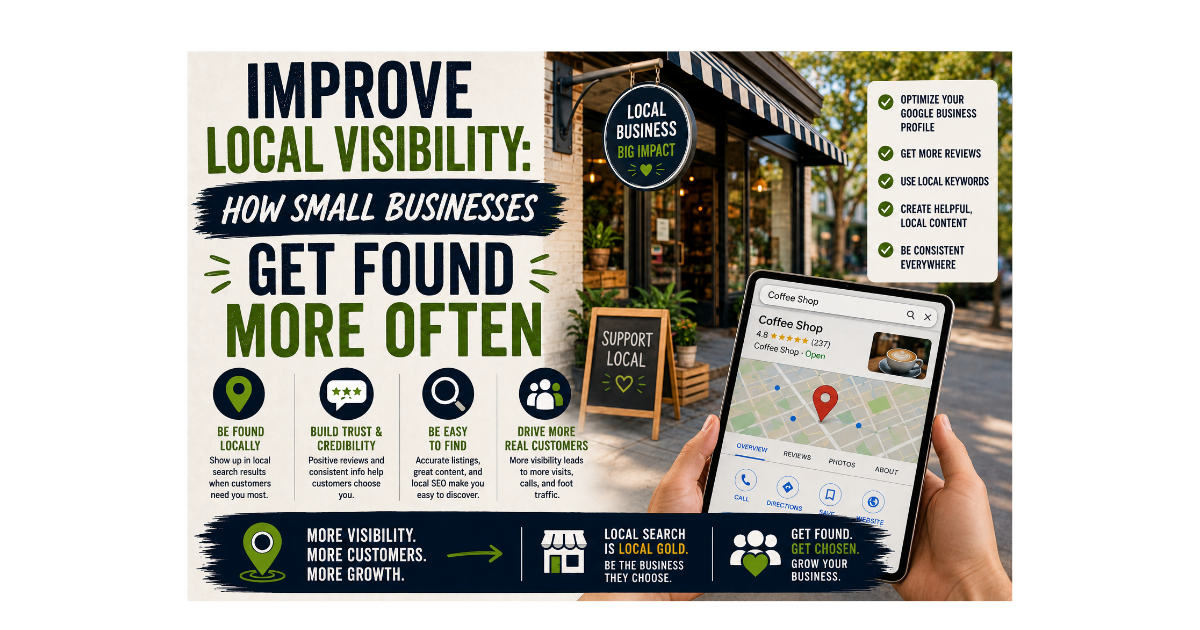
If local customers can't find your business, they can't buy from you. That's why improving local visibility should be one of the top priorities for any small business owner. Whether you run a retail store, restaurant, salon, repair shop, or service-based company, being visible in your local community can dramatically increase foot traffic, phone calls, and sales. The good news is that improving local visibility doesn't require a massive marketing budget. It simply requires consistent effort in the right places. One of the most effective ways to increase local visibility is through your Google Business Profile. Many consumers search online before visiting a physical location. A complete and optimized profile helps your business appear in local search results and on Google Maps. Make sure your business name, address, phone number, website, hours, and photos are always up to date. Customer reviews also play a major role in local visibility. Businesses with more positive reviews tend to rank higher and attract more attention. Encourage satisfied customers to leave honest reviews and always respond professionally to both positive and negative feedback. Reviews build trust and help potential customers choose your business over competitors. Another powerful strategy is local partnerships. Partner with other non-competing businesses in your area to cross-promote products and services. For example, a gym could partner with a health food store, or a bookstore could partner with a coffee shop. These partnerships expose your business to new audiences without significant advertising costs. Offline marketing remains one of the most overlooked ways to improve local visibility. Yard signs, flyers, direct mail campaigns, community bulletin boards, and local event sponsorships can all help put your business in front of nearby customers. Unlike digital ads that disappear quickly, physical marketing materials can continue generating attention for days or even weeks . Community involvement is another excellent visibility booster. Participate in local festivals, charity events, networking groups, and business associations. When people see your business actively supporting the community, they become more likely to remember and recommend you.  Consistent branding also matters. Your storefront signage, business cards, uniforms, vehicles, social media profiles, and printed materials should all have a consistent look and message. Repetition helps customers recognize your business wherever they encounter it. Don't forget about local content marketing. Creating blog posts, videos, and social media content focused on your city or community can help attract local customers searching for information online. Highlight local events , share customer success stories, or provide helpful tips relevant to your area. Improving local visibility isn't about finding one magical marketing tactic. It's about consistently showing up where your customers are looking. By combining online optimization, customer reviews, local partnerships, community involvement, and offline marketing, your business can become more visible, more trusted, and ultimately more profitable. The businesses that win locally are often the ones customers see the most. Make sure yours is one of them.
By Randall Magwood June 16, 2026
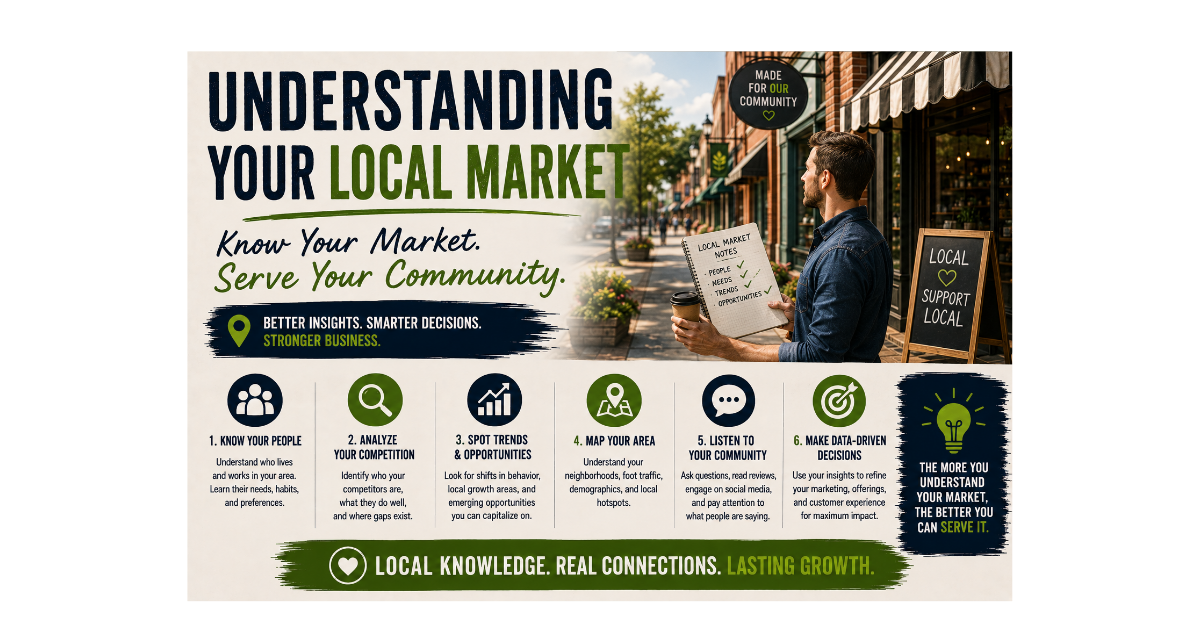
One of the biggest mistakes small business owners make is trying to market to everyone. The truth is that effective marketing starts with understanding the people who are most likely to buy from you. The better you understand your local market, the easier it becomes to attract customers, increase sales, and build long-term loyalty. Your local market consists of the people, businesses, and communities within your service area. These are the individuals who pass by your storefront, see your signs, attend local events, and have the highest likelihood of becoming repeat customers. Understanding what they need, want, and value allows you to create marketing that actually works. The first step is identifying your ideal customer. Ask yourself who benefits most from your products or services. Consider factors such as age, income level, occupation, lifestyle, and buying habits. For example, a coffee shop near a business district may target office workers looking for a quick morning stop, while a family restaurant may focus on parents seeking affordable dining options. Next, study your local competition. Visit their locations, review their websites, follow their social media accounts, and observe their promotions. Pay attention to what they're doing well and where they may be falling short. Competitor research can reveal gaps in the market that your business can fill. If customers frequently complain about slow service at a competitor's location, emphasizing speed and convenience in your marketing may help you stand out. Customer feedback is another valuable source of market information. Talk directly with customers whenever possible. Ask why they chose your business, what they like most, and what improvements they would like to see. Online reviews can also provide valuable insights into customer expectations and frustrations. The more feedback you collect, the better you'll understand the needs of your audience. Local demographics also play a major role in marketing success. Population growth , household income, age distribution, and community interests can all influence buying behavior. Many cities and counties publish demographic data that can help you better understand the people in your area. This information can guide decisions about pricing, product offerings, advertising, and promotions. Community involvement is another powerful way to learn about your market. Attend local events, join business associations, sponsor community activities, and build relationships with other local business owners. These interactions provide firsthand knowledge of what matters most to local residents and help establish your business as a trusted member of the community. Most importantly, remember that markets change. Consumer preferences evolve, new competitors enter the area, and economic conditions shift. Businesses that regularly monitor their local market are better equipped to adapt and stay ahead. Understanding your local market isn't complicated, but it does require attention and effort. By learning who your customers are, what they want, and how your business can serve them better than the competition, you'll create more effective marketing campaigns and build a stronger foundation for long-term growth. 
By Randall Magwood June 16, 2026
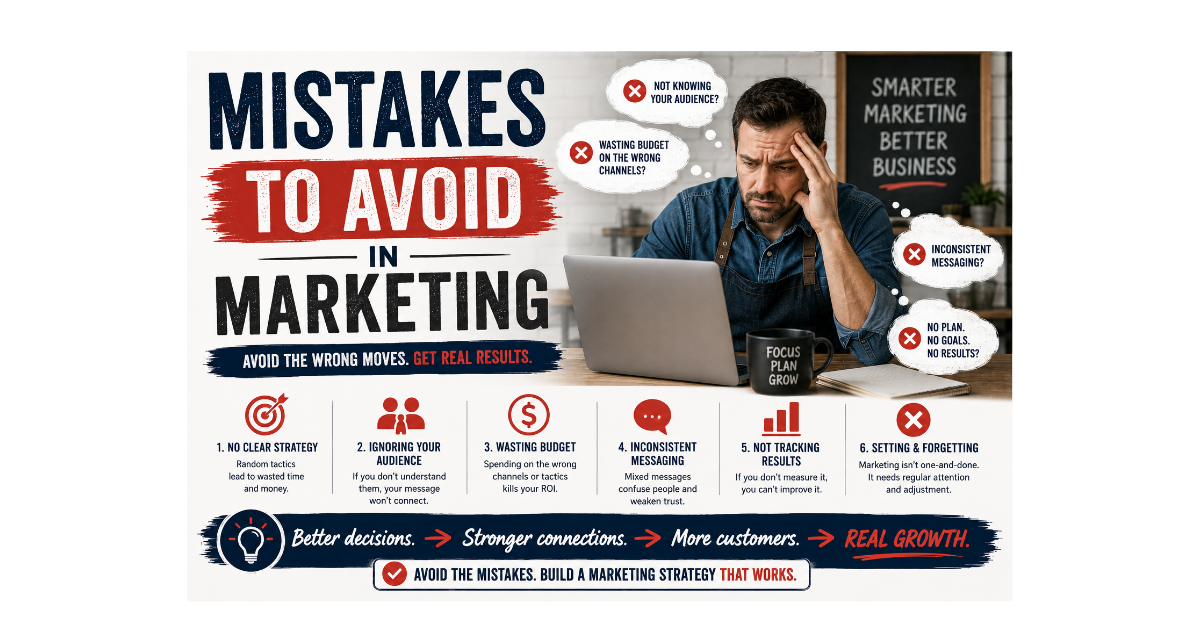
Marketing can be one of the most powerful tools for growing a business, but it's also one of the easiest areas to get wrong. Many business owners invest time and money into marketing without seeing the results they expected. In most cases, the problem isn't a lack of effort—it's a few common mistakes that quietly sabotage success. By avoiding these marketing pitfalls, you can attract more customers and get a better return on your investment. 1. Trying to Market to Everyone One of the biggest mistakes businesses make is attempting to appeal to everyone . When your message is too broad, it becomes less effective because it doesn't speak directly to anyone. Instead, identify your ideal customer and create marketing that addresses their specific needs, problems, and desires. A focused message will always outperform a generic one. 2. Inconsistent Branding Customers need repeated exposure to recognize and trust a business. If your logo, colors, messaging, or overall brand identity constantly changes, people may struggle to remember you. Consistent branding across your website, social media, signage, advertisements, and printed materials helps build familiarity and credibility. 3. Ignoring Existing Customers Many businesses spend all their energy chasing new customers while neglecting the ones they already have. Existing customers are often the easiest and most profitable source of future sales . Regular follow-ups, loyalty programs, email newsletters, and special offers can encourage repeat business and increase customer lifetime value. 4. Failing to Track Results If you don't measure your marketing efforts, you're essentially guessing. Many business owners continue investing in campaigns that aren't producing results simply because they aren't tracking performance. Whether you're using flyers, direct mail, online ads, or social media, track leads, sales, and customer responses. Data helps you identify what's working and what needs improvement. 5. Giving Up Too Soon Marketing rarely produces instant results. Many businesses launch a campaign, see little response after a few weeks, and abandon it. Successful marketing requires consistency and repetition . Customers often need multiple exposures to a message before taking action. Patience and persistence are critical for long-term success. 6. Focusing on Features Instead of Benefits Customers care less about what your product or service is and more about what it can do for them. Instead of listing features, explain the benefits and outcomes customers can expect. Show how your business solves problems, saves time, reduces stress, or improves their lives. 7. Relying on One Marketing Method Putting all your faith in a single marketing channel is risky. Algorithms change, advertising costs rise, and trends come and go. The most successful businesses use a mix of marketing methods , including referrals, direct mail, local advertising, email marketing, social media, and community involvement. Conclusion Marketing mistakes can be expensive, but they are also avoidable. By targeting the right audience, maintaining consistent branding, nurturing existing customers, tracking results, staying patient, emphasizing benefits, and diversifying your marketing efforts, you'll create a stronger foundation for growth. Effective marketing isn't about doing everything—it's about doing the right things consistently. 
By Randall Magwood June 16, 2026
Many small business owners invest time and money into marketing without ever knowing whether it's actually working. They run ads, print flyers, sponsor local events, and post on social media, but when asked which marketing activity produces the most customers, they often don't have a clear answer. That's a problem. If you don't measure your results, you're essentially guessing. And guessing can be expensive. The good news is that measuring marketing performance doesn't have to be complicated. In fact, a few simple tracking methods can reveal exactly where your customers are coming from and which campaigns deserve more of your budget. The first step is identifying your marketing goals. Are you trying to increase foot traffic, generate phone calls, collect leads, or boost sales? Different goals require different measurements. A restaurant may focus on customer visits, while a service business may care more about phone inquiries or appointment bookings. Once you've established your goals, start tracking the source of every lead or customer. One of the easiest ways to do this is simply by asking new customers, "How did you hear about us?" You may be surprised by the answers. What you thought was your best-performing marketing channel might actually be producing very few customers. Another effective strategy is using unique offers for different marketing campaigns. For example, a direct mail piece might contain a coupon code that's different from the one used in a newspaper advertisement. By tracking which codes are redeemed, you can determine which campaign generated the most responses. Phone tracking can also provide valuable insights. Dedicated phone numbers for specific campaigns allow you to see which advertisements are driving calls. Likewise, unique landing pages or QR codes can help measure responses from flyers, postcards, signs, and other offline marketing materials. Beyond tracking responses, it's important to calculate return on investment (ROI). This simply means comparing how much revenue a campaign generated against how much it cost to run. If a $500 direct mail campaign produces $3,000 in sales, that's a strong return. If another campaign costs the same amount but generates only $600 in revenue, you may want to reconsider that strategy. Remember that not all results are immediate. Some marketing efforts build awareness and trust over time. A customer may see your business sign, receive a postcard, and hear a recommendation from a friend before finally making a purchase. Consistent tracking helps you understand these patterns and make better decisions. The businesses that grow the fastest are rarely the ones spending the most on marketing. They're usually the ones measuring the most. When you know what's working, you can confidently invest more money into successful campaigns and eliminate those that aren't producing results. Marketing becomes much easier when the numbers tell you where to focus. Stop guessing, start tracking, and let your results guide your next move.
By Randall Magwood June 16, 2026
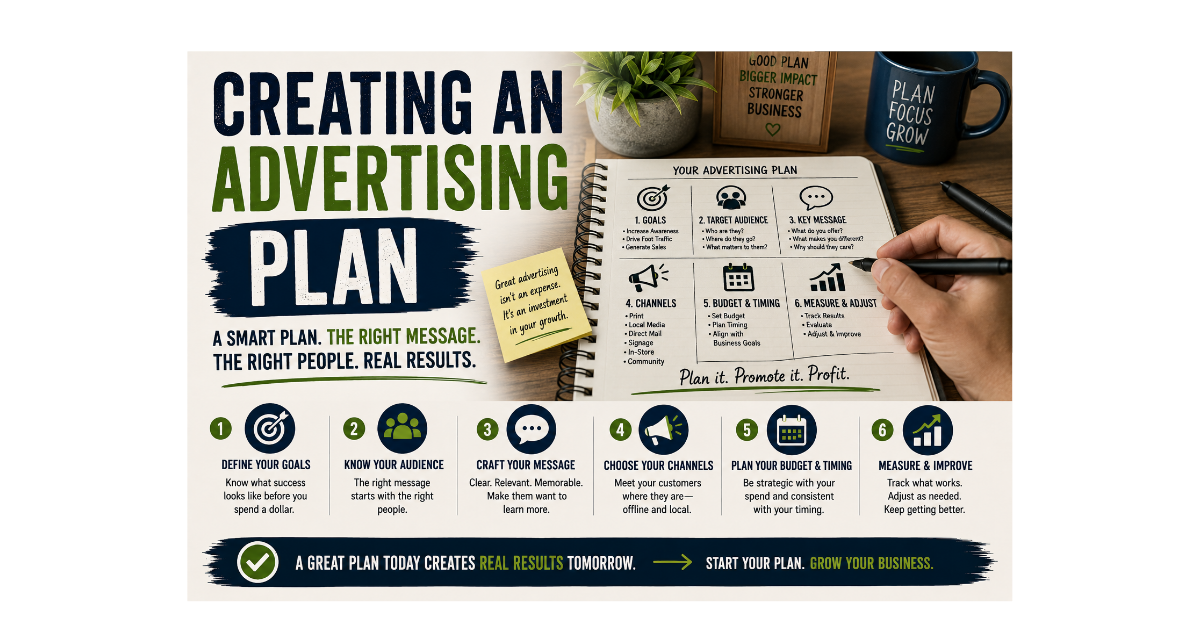
Many small business owners waste money on advertising because they jump straight into running ads without a clear plan. An effective advertising plan helps you focus your budget, target the right audience, and measure your results. Whether you're using print ads, direct mail, local radio, social media, or a combination of marketing channels, having a strategy in place is essential. Define Your Advertising Goals The first step in creating an advertising plan is determining exactly what you want to achieve. Your goal might be to increase foot traffic , generate phone calls, boost website visits, promote a special offer, or improve brand awareness in your local community. Specific goals make it easier to measure success. Instead of saying, "I want more customers," set a goal such as "Increase store visits by 20% over the next three months." Identify Your Target Audience Not everyone is a potential customer. Successful advertising focuses on reaching the people most likely to buy from you. Consider factors such as age, gender, income, interests, location, and buying habits. For example, a local hardware store may target homeowners, while a children's tutoring center may focus on parents with school-aged children. The more clearly you define your audience, the more effective your advertising will be. Choose the Right Advertising Channels Different audiences respond to different types of advertising. Your advertising plan should include the channels that best reach your ideal customers. Some common options include: Direct mail Newspaper advertising Local magazines Radio advertising Billboards and signage Community sponsorships Social media advertising Search engine advertising Many local businesses find that combining online and offline advertising produces the best results. Create Your Advertising Message Your advertisement should clearly explain what makes your business different. Focus on benefits rather than features. Ask yourself: What problem do you solve? Why should customers choose you? What offer can encourage immediate action? A strong call to action is critical. Tell people exactly what to do next, whether that's calling your business, visiting your store, requesting a quote, or redeeming a coupon. Set Your Budget Determine how much you can realistically invest in advertising each month. Your budget should align with your goals and expected return on investment. Start with a budget you can sustain consistently. Running smaller campaigns regularly often works better than spending a large amount once and then stopping. Track and Measure Results An advertising plan is only effective if you measure performance. Track phone calls, website traffic, coupon redemptions, store visits, lead forms, and sales generated by each campaign. Use unique phone numbers , promo codes, landing pages, or customer surveys to identify which advertisements are producing results. Review and Improve Advertising is not a one-time activity. Review your results regularly and make adjustments based on what is working. Successful businesses treat advertising as an ongoing process of testing, measuring, and improving. A well-structured advertising plan helps eliminate guesswork, maximize your marketing budget, and generate more customers over time.